
Best Property Management Companies in San Antonio, Ranked
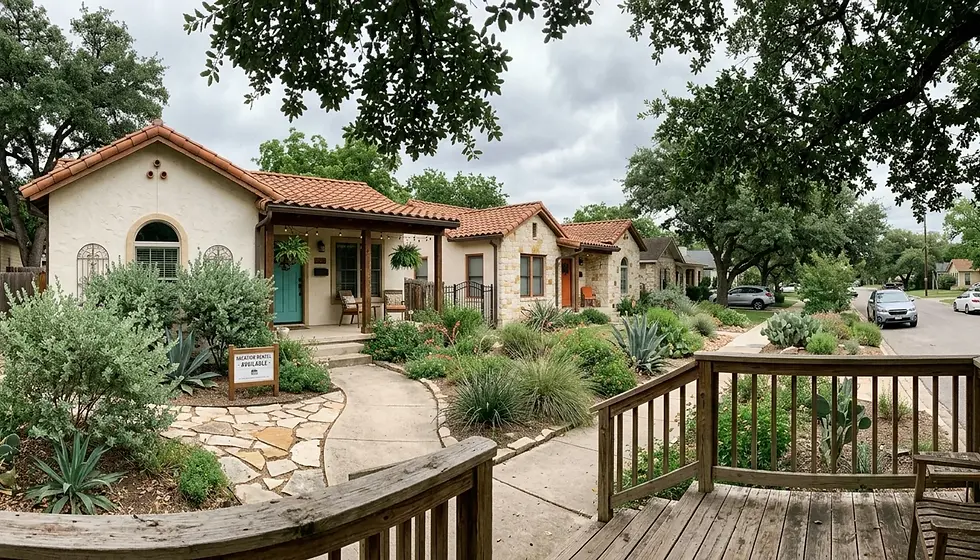
Finding the best property management company in San Antonio means sorting through a crowded field of residential managers, vacation rental specialists, and hybrid operators, and making the wrong call costs more than a management fee. At Stay In The Heart of Texas, we operate a managed portfolio of short-term rentals across Texas, including properties in New Braunfels and the broader San Antonio metro corridor, and the question we hear most often from prospective owners is simple: who should actually manage my property? This guide ranks the top options, explains what separates good management from expensive mediocrity, and gives you the framework to make a decision that fits your specific investment.
San Antonio's STR market scored 91 out of 100 on AirDNA's Market Score in 2026, making it one of the highest-rated short-term rental markets in Texas.
Average annual STR revenue in San Antonio is $20,100, with an average daily rate of $174.60 and an occupancy rate of 56%, according to AirDNA (2026).
Active STR listings in San Antonio grew 8% over the past year, meaning competition is increasing and professional management is no longer optional for owners who want to stay ahead.
Professional management fees typically range from 10% to 35% of gross income for full-service short-term rental management, compared to 8% to 12% for traditional long-term residential management.
Nearly 60% of landlords who start self-managing eventually hire professional management within two years, according to PMI NWI (May 2026), a pattern driven by the time cost of daily operations.
The right management company for San Antonio depends entirely on whether you are running a short-term vacation rental or a long-term residential rental, as the two service models are fundamentally different.
What Makes San Antonio a Strong Market for Property Investment in 2026?
San Antonio is a property investment market defined by durability and scale. According to Visit San Antonio, the city's tourism industry generates $23.4 billion in economic impact annually and supports more than 150,000 jobs, producing $284 million in tax revenues that flow back to city residents. That level of visitor activity creates sustained demand for both short-term vacation rentals and long-term residential units, which is exactly the combination that makes a management investment worthwhile.
On the short-term rental side, AirDNA tracked 9,670 available STR listings in San Antonio as of 2026, with RevPAR sitting at $90.20 and growing 6% year-over-year. Those numbers reflect a market where professionally managed properties are pulling ahead of self-managed ones. The River Walk, the Alamo, the Pearl District, and the King William Historic District all generate consistent demand from leisure travelers, business visitors, and event-driven guests who book cabins and homes specifically because they want something more personal than a hotel room.
On the long-term residential side, the picture is more nuanced. The median asking rent in the San Antonio-New Braunfels metro fell to $1,213 in January 2026, down approximately 1.0% year-over-year, according to Realtor.com. A rental vacancy rate of roughly 7.5% signals a renter-friendly environment where landlords need proactive marketing and tenant retention strategies, not passive management. In both segments, working with the right management company is the difference between a performing asset and a maintenance problem that generates spreadsheets instead of income.

What Are the Top Property Management Companies in San Antonio?
The best property management company in San Antonio for your investment depends on one critical question: are you managing a short-term vacation rental or a long-term residential rental? Most companies in this market specialize in one model. Mixing them up is the most common mistake owners make when hiring. Below, you will find the companies worth evaluating in each category, starting with the option built specifically for short-term rental operators in the Texas market.
1. Stay In The Heart of Texas: Best for Short-Term Rental and Vacation Rental Management
Stay In The Heart of Texas is a full-service short-term rental management company operating across the Texas Hill Country and San Antonio corridor. The team handles every aspect of the owner-side operation: dynamic pricing and revenue management, listing optimization across Airbnb and VRBO, professional guest communication, housekeeping coordination, maintenance support, and channel management across multiple booking platforms. For owners who want their cabin or vacation home to perform at the level of a professionally run hospitality property, this is the service model that delivers it.
What separates Stay In The Heart of Texas from residential management firms is the specific focus on STR performance. The team manages properties in New Braunfels, San Marcos, Fredericksburg, San Antonio, and Austin, giving them a ground-level view of how demand shifts across the Texas Hill Country corridor throughout the year. That local knowledge informs pricing decisions that flat-rate or guess-work pricing simply cannot replicate.
The portfolio includes properties that illustrate the company's range. The Haus Fredericksburg Log Cabin sits on two wooded acres near Main Street, designed by award-winning interior designer Christina Atkinson, sleeping up to 9 guests. The Retreat Fredericksburg Log Cabin, also designed by Christina Atkinson, accommodates up to 18 guests with a detached game room. In New Braunfels, Texas Haus is a design-forward ranch-style home steps from tubing and Schlitterbahn, while Water Spray Lane serves guests traveling between San Antonio and Austin. In Fredericksburg, Musik Haus is a nearly century-old Texas-music-themed cottage with original hardwood floors and a hot tub, and Barn Haus is a fully restored reclaimed goat barn built around a preserved live oak tree.
For owners considering their first listing, Stay In The Heart of Texas also offers STR consulting and initial setup support, including technology stack organization, revenue projections, and listing launch guidance. For owners who want to stay involved without carrying daily operations, the co-hosting arrangement keeps you in the loop while the team handles the on-the-ground coordination.
Service offerings include full-service property management, revenue management and dynamic pricing, co-hosting and co-management, listing optimization, guest communication and support, channel management, STR consulting and advisory, B&B management, and hotel management.

2. Other Established Property Management Firms in San Antonio
Hendricks Property Management has operated in San Antonio since 1978 as a second-generation family business focused exclusively on long-term residential management across neighborhoods including Alamo Heights, Stone Oak, and The Dominion. They do not serve short-term rental operators.
Real Property Management Alamo is part of the national Real Property Management franchise, offering standardized screening protocols and a national technology platform for long-term residential owners. This is a residential option, not a vacation rental manager.
The San Antonio market also includes several other long-tenured residential firms. Liberty Management brings over four decades of local experience. Pyramis Company Property Management, Wright Property Group, PMI Birdy Properties, CloverLeaf Property Management, RentWerx, and Brass Ring Properties round out the field of established residential operators, each focusing on long-term lease management, tenant screening, and rent collection for single-family homes and small multifamily properties. None of them specialize in Airbnb or vacation rental management.

How Much Does Property Management Cost in San Antonio?
Property management costs in San Antonio differ significantly based on the rental model. For long-term residential management, most providers charge between 8% and 12% of monthly collected rent, according to TenantCloud (2026). That range aligns with national benchmarks, where the typical management fee across the top 50 U.S. metros sits in a similar band. Leasing fees for placing a new tenant typically add 50% of the first month's rent. Renewal fees, setup charges, and annual maintenance review fees vary by provider and can add meaningfully to the total annual cost.
For short-term rental management, the fee structure works differently. Full-service STR managers typically charge between 20% and 35% of gross booking revenue, reflecting the higher operational intensity of vacation rental management. Guest communication happens seven days a week. Turnovers occur multiple times per month. Pricing requires continuous adjustment based on demand signals. When you compare a 10% long-term management fee against a 25% STR management fee, the correct question is not which percentage is lower but which model generates more net income on your specific property.
Consider this: San Antonio STRs averaged $20,100 in annual revenue in 2026 according to AirDNA, with professionally managed listings consistently outperforming self-managed ones in occupancy and ADR. A 25% management fee on a professionally optimized $28,000-grossing STR still nets significantly more than a 10% fee on a residential lease at current median rents. The math favors the model that maximizes your gross revenue first.
Management Model | Typical Fee Range | What It Covers | Best For |
Long-Term Residential | 8% to 12% of monthly rent | Tenant screening, rent collection, maintenance coordination, lease management | Single-family homes, duplexes, annual tenants |
Full-Service STR | 20% to 35% of gross booking revenue | Guest communication, dynamic pricing, listing management, housekeeping, channel distribution | Vacation homes, cabins, high-demand urban properties |
Co-Hosting / Co-Management | 10% to 20% of gross booking revenue | On-the-ground support, guest check-in, cleaning coordination; owner retains pricing and listing control | Partially involved owners who want local support |
STR Consulting Only | Flat project fee (varies) | Market analysis, setup guidance, pricing strategy, compliance review | First-time hosts, investors evaluating a purchase |
What Are Red Flags When Hiring a Property Manager?
Red flags when hiring a property manager are warning signs that reveal poor communication practices, misaligned incentives, or operational gaps that will cost you money before you ever see a problem in writing. Knowing what to screen for before you sign a management agreement is one of the highest-value steps you can take as a property owner.
The first red flag is vague fee disclosure. A manager who cannot give you a clear, itemized breakdown of every charge you will see on your monthly statement is either disorganized or hiding fees that show up later. Ask specifically about setup fees, leasing fees, renewal fees, maintenance markups, and inspection charges. Every legitimate firm can answer this question in writing on the first call.
The second red flag is no local market knowledge. A property manager who cannot speak specifically about San Antonio's STR occupancy trends, the impact of events like the San Antonio Stock Show and Rodeo on booking demand, or the regulatory environment around short-term rentals is not equipped to maximize your property's performance. Generic answers about "market conditions" are a substitute for actual expertise.
The third red flag is poor communication responsiveness during your vetting process. If a manager takes three days to return your inquiry email before you are a client, the response time after you sign will not improve. Test response time deliberately during the selection process.
The fourth red flag is no clear technology stack for STR management. In 2026, any professional vacation rental manager should be able to describe the dynamic pricing tool they use, the channel manager that syncs their calendars across Airbnb and VRBO, and the owner reporting dashboard where you can view booking performance. Managers who rely on manual pricing adjustments and spreadsheets are leaving your revenue on the table.
A fifth flag specific to the San Antonio market: be cautious of residential property managers who claim to offer STR management as a side service. The operational model for short-term rentals is fundamentally different from long-term lease management. Guest communication alone, at the volume and speed that Airbnb's algorithm rewards, is a full-time function that residential managers have no infrastructure to support.
What Are San Antonio's Short-Term Rental Regulations for 2026?
San Antonio's short-term rental regulatory environment is a material factor in the profitability of any vacation rental investment in the city. AirDNA's Regulation sub-score for the San Antonio STR market sits at 65 out of 100 as of 2026, which classifies it as a moderately regulated environment. That score means San Antonio is neither fully permissive nor heavily restrictive, but it does mean compliance cannot be treated as an afterthought.
San Antonio requires short-term rental operators to register their property and collect and remit Hotel Occupancy Tax (HOT) to both the City of San Antonio and the State of Texas. The Texas Comptroller of Public Accounts (comptroller.texas.gov) administers the state-level HOT requirement, which applies to any short-term rental operating fewer than 30 consecutive days per stay. Owners who fail to register or remit HOT face penalties that accumulate quickly and are not waivable without a compliance history.
Notably, 48.7% of San Antonio STR listings require a minimum stay of 30 or more nights, according to AirDNA (2026). This trend reflects a deliberate strategy by many operators to avoid short-term rental regulations by positioning properties as medium-term rentals, which carry different tax and permit requirements. If you are considering this approach for your property, consult directly with the City of San Antonio Development Services Department and a local tax professional before adjusting your minimum stay settings.
For owners with properties inside homeowners associations, HOA deed restrictions on short-term rentals add a layer of complexity that city permits do not override. Review your HOA governing documents before assuming a city STR registration is sufficient authorization to operate.
The single most practical reason to hire a professional STR management company in San Antonio is regulatory continuity. A good manager monitors ordinance changes, ensures HOT remittance is filed correctly, and keeps your listing in compliance with platform-level requirements so a policy change does not silently disqualify your property from search results.

Which San Antonio Neighborhoods Perform Best for Vacation Rentals?
San Antonio short-term rental performance varies significantly by neighborhood, and choosing the right micro-market is as important as choosing the right management company. Most property management articles in this market ignore neighborhood-level analysis entirely, which is a significant gap for anyone making a purchase or listing decision.
The River Walk adjacent areas and downtown core produce strong occupancy driven by convention traffic, leisure visitors, and business travelers who want walkable access to restaurants and the Alamo. Properties within a 10-minute walk of the River Walk consistently attract premium nightly rates, particularly during the San Antonio Fiesta in April, the Stock Show and Rodeo in February, and major sporting events at the AT&T Center.
The King William Historic District and Southtown offer a different demand profile: guests who want architectural character, proximity to art galleries, and access to the Pearl District's restaurant scene. Properties in this corridor attract longer average stays and often achieve above-average ADR because guests are specifically seeking the neighborhood's character, not just a hotel alternative.
Alamo Heights and the Monte Vista neighborhood draw a mix of business travelers and medical-corridor visitors, with proximity to the South Texas Medical Center generating consistent mid-week demand. Properties here tend to hold occupancy more steadily through the week than purely leisure-driven areas.
The San Antonio market as a whole shows 87% of STR listings are entire home rentals, according to AirDNA (2026), which confirms that guests in this market strongly prefer private, full-home accommodations over private rooms. If you own a single-family home or standalone vacation property in any of the above neighborhoods, you are in the right asset class for the demand that exists.
Platform distribution matters too. San Antonio STR listings split primarily between Airbnb (51%) and properties listed on both Airbnb and VRBO (43%), with pure VRBO listings at just 6%. Owners who list exclusively on Airbnb are missing a meaningful share of potential booking volume from VRBO's distinct traveler base, particularly family and group travelers who favor VRBO's fee structure for multi-night stays. A channel management strategy that covers both platforms is the baseline expectation from any management partner worth considering.
How Do You Choose the Right Property Manager for Your San Antonio Investment?
Choosing the right property manager in San Antonio is a process of matching your property type, investment goals, and operational involvement level to the specific capabilities of the management company. Start with the rental model: long-term residential management and short-term vacation rental management are two separate industries that happen to involve the same asset class. They require different technology, different staffing, and different revenue strategies. Hiring the wrong type for your property is the most expensive mistake in this decision.
For short-term rental owners, the evaluation should cover five specific areas. First, ask how the company handles dynamic pricing and what tool or data source drives nightly rate changes. A legitimate STR manager can name the pricing software they use (tools like AirDNA for market data are a standard reference point) and explain how rates are adjusted around local events and demand spikes. Second, ask about their channel distribution strategy. Any professional operator should be listing on at least Airbnb and VRBO simultaneously with a channel manager that prevents double bookings.
Third, ask how guest communication is handled and what the average response time is for guest inquiries. Airbnb's algorithm rewards fast response rates, and a slow response to a booking inquiry can drop your listing's search placement. Fourth, ask for a sample owner report to understand how performance data is presented. You should be able to see booking dates, nightly rates, occupancy, and gross revenue in a format you can actually use to evaluate performance.
Fifth, and most practically: ask for references from current property owners in a comparable neighborhood. An STR manager who cannot produce a reference from a San Antonio or New Braunfels owner is not yet operating at the scale and accountability that a professional engagement requires. The companies with the strongest owner track records are not shy about this.
Our team at Stay In The Heart of Texas regularly walks prospective owners through this exact evaluation, not because we expect every owner to hire us, but because an informed owner makes a better long-term partner when they do. A few honest conversations before signing a management agreement saves months of frustration afterward.
Frequently Asked Questions About Property Management in San Antonio
What are the top 5 property management companies in San Antonio?
The top property management options in San Antonio in 2026 depend on your rental model. For short-term and vacation rental management, Stay In The Heart of Texas is the specialist choice for Texas Hill Country and San Antonio corridor properties, offering full-service STR management including dynamic pricing, listing optimization, and guest communication. For long-term residential management, established local firms include Hendricks Property Management, Real Property Management Alamo, Liberty Management, and Pyramis Company Property Management. The most important distinction is that STR and long-term residential management are separate service models requiring different expertise, so matching the company to your rental type matters more than choosing the most well-known name on the list.
How much does property management cost in San Antonio?
Long-term residential property management in San Antonio typically costs between 8% and 12% of monthly collected rent, according to TenantCloud (2026), plus leasing fees when placing a new tenant. Full-service short-term rental management runs higher, typically 20% to 35% of gross booking revenue, because the operational scope is broader: it includes dynamic pricing, daily guest communication, housekeeping coordination, and multi-platform listing management. Co-hosting arrangements for STR owners who want partial support usually fall in the 10% to 20% range. Professional management fees can range from 10% to 35% of gross income depending on the service level, according to The CEO Host.
What is the 2% rule for rentals in San Antonio?
The 2% rule for rentals is a quick investment screening formula: a property may perform well as a rental if the monthly rent equals at least 2% of the purchase price. For example, a property purchased at $150,000 would need to generate $3,000 per month in rent to satisfy the rule. In San Antonio's current market, where the median listing price was $295,000 as of January 2026 (Realtor.com), hitting the 2% threshold on a standard residential rental is extremely difficult. The 2% rule works better as a directional filter than as a hard standard in higher-cost markets. For vacation rental investors, the relevant benchmark is annual gross revenue as a percentage of purchase price rather than the monthly rent ratio.
What are red flags when hiring a property manager in San Antonio?
Key red flags when hiring a property manager in San Antonio include vague or incomplete fee disclosure, inability to describe their dynamic pricing strategy for STRs, slow communication during the vetting process, no named technology platform for channel management or owner reporting, and offering STR management as a secondary service alongside a primarily residential business. For vacation rental owners specifically, a manager who cannot describe how they handle HOT remittance, Airbnb algorithm optimization, or multi-platform calendar synchronization is not equipped to protect your investment in a market with 9,670 competing listings and growing.
Do I need a permit to list my San Antonio property on Airbnb?
Yes. San Antonio requires short-term rental operators to register their property with the city and collect and remit Hotel Occupancy Tax to both the City of San Antonio and the State of Texas through the Texas Comptroller of Public Accounts. The regulatory environment is classified as moderately restrictive, with an AirDNA Regulation sub-score of 65 out of 100 as of 2026. Requirements can change, so verify current ordinances directly with the City of San Antonio Development Services Department and review any applicable HOA deed restrictions before listing. A professional STR management company should handle ongoing compliance monitoring as part of their service.
Is it worth hiring a property manager for a San Antonio vacation rental?
For most San Antonio vacation rental owners, yes. Nearly 60% of landlords who start self-managing eventually hire professional management within two years, according to PMI NWI (May 2026), driven by the time burden and the revenue gap between professionally managed and self-managed listings. San Antonio STRs averaged $20,100 in annual revenue in 2026, but that average includes underperforming self-managed listings that drag it down. A professional manager who applies dynamic pricing, multi-platform distribution, and optimized guest communication consistently outperforms the average, and the net revenue gain often exceeds the management fee cost.
What is the difference between full-service STR management and co-hosting in San Antonio?
Full-service STR management transfers all operational responsibility to the management company: pricing, listing management, guest communication, housekeeping coordination, maintenance, and reporting. The owner receives a monthly statement and payment with no daily involvement required. Co-hosting is a partial-service model where the owner retains control of the listing and pricing decisions while the management company handles on-the-ground tasks like check-in coordination, cleaning oversight, and maintenance response. Co-hosting suits owners who live near their property or want to stay involved, while full-service management is the right choice for out-of-state owners or anyone who wants a genuinely hands-off investment.
What Should San Antonio Property Owners Do Next?
The best property management company in San Antonio is not a universal answer. It is the company that matches your rental model, your investment goals, and your tolerance for operational involvement. For long-term residential owners, the established local firms in this market bring decades of tenant screening experience and court relationships that genuinely matter when lease enforcement is necessary. For short-term and vacation rental owners, the answer is different: you need a team that understands dynamic pricing, platform algorithms, guest experience standards, and HOT compliance, because the operators who miss any one of those components leave real money on the table in a market where the top performers averaged an ADR of $174.60 and 56% occupancy in 2026, with that trend moving upward.
San Antonio's STR market scored 91 on AirDNA's Market Score, with an 85 for Investability. That score reflects a market with genuine upside for owners who run their properties like businesses rather than passive income side projects. The management company you choose is the largest single variable in whether your investment captures that upside or contributes to the average.

If you own a short-term rental, vacation home, or cabin in San Antonio, New Braunfels, or anywhere along the Texas Hill Country corridor and you want professional management that is built specifically for the STR model, Stay In The Heart of Texas manages properties across this exact market. The team handles full-service property management, dynamic pricing, listing optimization, guest communication, housekeeping coordination, and channel distribution, so your investment performs the way it was intended to from day one. Reach out at stayintx.com to start the conversation.



Comments