
How to Choose a Property Management Company Austin TX
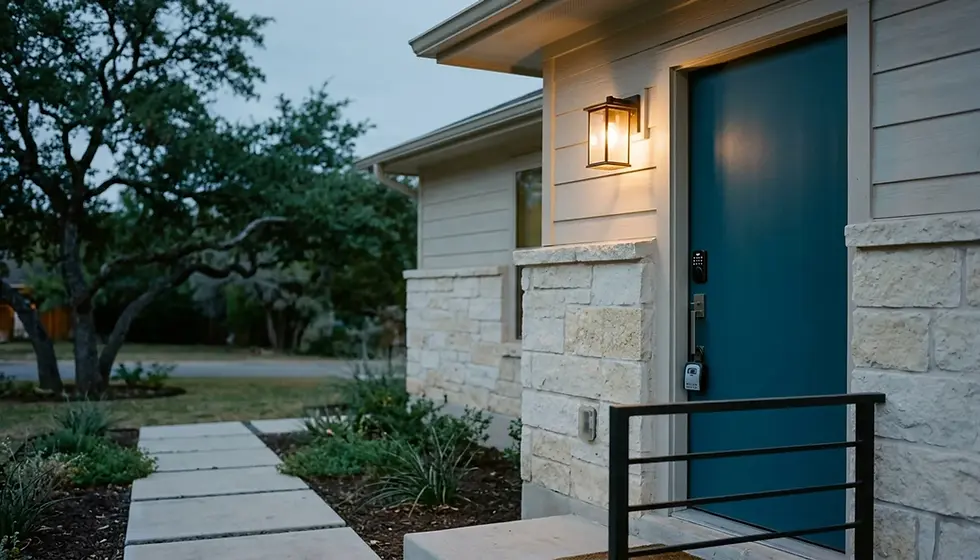
A property management company in Austin, TX runs your short-term rental day to day, handling pricing, guest messages, cleaning, and repairs, typically for 15% to 30% of gross booking revenue. At Stay In The Heart of Texas, we manage short-term rentals across Texas, and choosing well comes down to fees, contract terms, and local compliance.
Key Takeaways
Full-service short-term rental management typically costs 15% to 30% of gross nightly revenue, while co-hosting usually runs 10% to 18%.
Austin had 17,038 active short-term rental listings in June 2026, with average occupancy near 55% and an average daily rate of $263, according to AirDNA.
Percentage fees are not the only structure. Flat retainers, co-hosting, and a la carte pricing exist, each with different risk for you.
Always request a written fee schedule and sample agreement before signing, and check maintenance markups, termination terms, and owner reserve rules.
Verify city licensing, hotel occupancy tax handling, and any Texas Real Estate Commission licensing questions with official sources before you hire.
Picture an owner in another state reading a cleaner's cancellation text on a Friday afternoon, with guests arriving at four. That scenario is the reason owners start searching for a manager. Austin makes it sharper, because event weekends such as Austin City Limits and Formula One typically bring strong demand and zero tolerance for a missed turnover.
This guide walks you through eight steps in order. It covers what a manager does, what it costs, and how to dodge or restructure percentage fees. It also covers which management model fits, which rules to check, how to vet a contract, how to get a quote, and how we handle it. Fee figures are estimates, current as of 2026, and your actual quote will vary by property.
Step 1: What Does a Property Management Company in Austin, TX Do?
A short-term rental manager is a service provider that operates your furnished property as a guest-ready business. The scope covers dynamic pricing, listing management, guest communication, housekeeping and maintenance coordination, channel management, and owner reporting. You keep the asset and the profit; the manager absorbs the daily work.
Think about what a normal week looks like at a rental. Guests message at 11pm about the hot tub. A same-day turnover needs a backup cleaner. A smart lock code has to be changed. Someone has to keep the calendars on Airbnb and VRBO synced with Booking.com so one night is never sold twice.
Specifically, a full-service manager should cover these jobs:
Setting nightly rates daily against local demand and comparable listings
Writing and tuning the listing, including photo guidance and amenity ordering
Answering every inquiry, check-in question, and complaint
Scheduling and inspecting housekeeping, plus coordinating repairs with vetted vendors
Sending a monthly owner statement you can actually read
In our experience, owners underestimate the messaging and vendor coordination far more than the cleaning itself. You can browse the homes we manage to see the kind of listing presentation and amenities that this workload supports.
Step 2: How Much Do Austin Property Managers Charge?
Austin short-term rental management fees are commissions calculated on gross booking revenue. According to Mavericks TR, short-term rental management typically costs between 15% and 30% of gross nightly revenue depending on service level. RapidEye puts the 2026 national average for full-service management at roughly 20% to 25%.
Service level | Typical fee | What you still handle |
Full-service management | 15% to 30% of gross booking revenue | Reviewing statements and approving large repairs |
Co-hosting | 10% to 18% of gross revenue | Owning the listing account and staying involved in decisions |
Self-management | No commission | Everything, including the late-night messages |
Percentages only matter against the revenue they apply to. AirDNA's Austin market data for June 2026 shows average trailing-twelve-month revenue of $24,600 per listing. From June 2025 to June 2026, occupancy rose 8.0% year over year while the average daily rate fell 7.1%.
Meanwhile, AirROI reports that professionally managed Austin Airbnb listings earn $44,864 annually versus $23,162 for self-hosted ones, a 94% premium. Treat that gap as a reason to price carefully, not a promise for your home.
Fees beyond the commission deserve scrutiny. Maintenance markups vary, with some managers passing invoices through at cost and others adding 10% to 20%. Owner reserves for routine repairs typically sit between $200 and $500.

How to Switch Property Management Companies in Austin, TX (Step-by-Step Guide for Landlords)
Step 3: How Do You Avoid Percentage-Based Property Management Fees?
A percentage-based management fee is a commission tied to gross booking revenue rather than a fixed monthly amount. You can avoid it by choosing a flat monthly retainer or a co-hosting arrangement. A la carte services such as pricing only or listing setup only also work.
Each alternative moves risk onto a different party. Under a percentage fee, a slow month costs the manager too, so incentives line up with yours. Under a flat retainer, you pay the same whether the calendar is full or empty.
Here is our honest read. If your Austin property already books steadily and you want predictable costs, a flat or tiered structure can come out cheaper. If you are launching a new listing, a percentage fee is safer because the first 90 days are slow while reviews and ranking build.
Ask three questions of any flat-fee proposal. What is excluded, such as turnovers, supplies, and inspections? Does the fee rise with property size or number of channels? And who handles pricing, because pricing is where most revenue is won or lost?
At Stay In The Heart of Texas, we quote each property individually after reviewing its location, size, and goals, and we can structure the relationship as co-hosting, full management, or advisory only. Pricing and revenue analysis are part of the relationship, not a disconnected add-on.
Step 4: Which Management Model Fits Your Austin Property?
Choosing a management model means matching your available time, local proximity, and appetite for control to one of three structures: self-management, co-hosting, or full-service management. The right pick depends less on the property than on what you want your phone to do at 10pm.
Model | Best fit | Main trade-off |
Self-management | A nearby owner with a flexible schedule and a single low-complexity unit | Your time and your phone |
Co-hosting | An owner who wants to keep control of the listing but not the operations | Shared decisions mean you stay involved |
Full-service | Out-of-state, inherited, or multi-property owners | Higher commission, far less work |
Self-managing is a fair choice for a local owner with one simple unit. We say that plainly, because hiring a manager only pays off when the time saved or revenue gained exceeds the fee. Out-of-state owners and burned-out hosts usually cross that line quickly.
Geography matters inside Austin too. Ask which submarkets a manager actually services, from Downtown and East Austin to Round Rock, Cedar Park, and Pflugerville. Drive time shapes how fast a cleaner or handyman can reach your door on a turnover day.
Also confirm the manager truly runs short-term rentals. A firm built around long-term tenant placement works from a different playbook. It has no nightly pricing and no same-day turnovers, and it does no guest messaging.
Step 5: What Austin and Texas Rules Should You Check First?
Austin short-term rental compliance means holding any license or registration the city requires, collecting and remitting hotel occupancy tax, and following HOA, deed, and lease restrictions. Requirements change, so verify the current rules with the City of Austin and the Texas Comptroller of Public Accounts before you list or switch managers. We do not quote ordinance specifics here, because the city amends them and only its current text counts.
Start with the tax question, since owners forget it most often. Ask any manager who registers for and files hotel occupancy tax, whether it is remitted from booking revenue, and how it appears on your statements. The answer should be specific, not a shrug.
Next, ask about licensing. Whether a short-term rental manager needs a Texas real estate license can depend on exactly what the manager does, so ask directly and check any license in the Texas Real Estate Commission lookup. We are not lawyers, and nothing here is legal or tax advice.
Finally, read your HOA documents and insurance policy. A home that violates deed restrictions or lacks a short-term rental endorsement can lose its coverage right when a claim arrives. A good manager flags this during onboarding, not after the first complaint.
As of 2026, Austin's supply is shifting; AirDNA reported active short-term rental listings down 11.5% over the year to June. Fewer competing listings help, but only if yours is compliant and visible.

Step 6: How Do You Verify a Manager and Read the Contract?
Verifying a property manager means confirming licenses and testing responsiveness. It also means reading independent reviews and reviewing the written management agreement line by line. Company websites describe intentions; the fee schedule and agreement describe obligations. Ask for both before any phone call turns into a handshake.
Your contract checklist should include these items:
Monthly fee and basis: gross revenue or net, and whether cleaning fees count
Onboarding or setup charges: including photography and furnishing support
Maintenance markup: pass-through at cost or an added 10% to 20%
Approval threshold and reserve: how much can be spent without calling you
Termination terms: notice period, fees, and what happens to your listing and reviews
Reporting: a sample owner statement showing revenue, expenses, and comparison against similar homes
The termination clause deserves extra attention. If the manager owns the listing account, your reviews may stay behind when you leave. Co-hosting arrangements where you own the account avoid that problem.
Separate company claims from independent evidence. A manager's own five-star testimonials count for little. Look for reviews on neutral platforms, and test the manager yourself: send an inquiry at 9pm and note how long the reply takes.
Last, ask for a sample statement. A vague statement that does not show where revenue went is the most common complaint we hear from owners coming to us from other managers.
Step 7: How Do You Get a Property Management Quote in Austin?
A property management quote is a written proposal listing the commission and one-time fees for your specific home. It should also spell out markups and services. To get one, share your address, bedroom count, furnishing status, HOA details, and goals, then ask for the full fee schedule alongside any revenue estimate.
Be wary of a revenue estimate with no stated assumptions. A trustworthy one names the comparable listings and the occupancy assumption. It also gives the nightly rate range, and it never guarantees results. Run your own numbers too, including platform fees, cleaning costs, supplies, and a realistic vacancy rate.
Compare quotes on the same basis. One manager's 20% that includes cleaning coordination and supplies may cost less than another's 15% with add-ons. Line up each quote against the same list of services before choosing.
People also ask who the best Austin property managers are. No honest list can rank them for you without knowing your property, but the criteria are clear: short-term rental specialization and transparent fees, plus vetted vendors with backup coverage. Owner reporting and fast communication matter too. Hold every candidate, including us, to that standard.
If you own across several Texas markets, ask whether the manager handles them consistently. Pricing and listing optimization work remotely, along with channel management, so they can run from anywhere, while hands-on tasks depend on a local team.
Step 8: How Does Stay In The Heart of Texas Handle Management?
Stay In The Heart of Texas is an owner-operated, Fredericksburg-based short-term rental management company that coordinates pricing, guest communication, housekeeping, and maintenance through one accountable team. Austin is one of our markets, alongside Fredericksburg, New Braunfels, San Marcos, and San Antonio.
We manage 10 short-term rentals, and across our Texas-area homes, nightly rates averaged $258 over November 2025 to November 2026. Demand at those homes peaks in June. Our portfolio leans toward Hill Country cabins and houses, so we use Austin data for Austin decisions rather than assuming our rates carry over.
Here is how that works for an Austin home. Before an event weekend such as Austin City Limits or Formula One, we check the calendar against AirDNA's market figures, raise rates for those dates, and set a minimum stay so one booking does not break up a high-demand block. We schedule the cleaner and a backup for each checkout, confirm smart lock codes the day before arrival, and answer guest messages the same evening. If a repair comes up, we send the vetted vendor first and call you only when the cost passes the approval threshold in your agreement. After the weekend, your statement shows revenue, expenses, and how the dates compared with the rest of the month.
Water Spray Lane in New Braunfels shows how we think about location. A guest used it for work, praising the position between San Antonio and Austin, so we market that corridor appeal to mixed leisure and business travelers. Our rental collection shows more examples of how we position different property types.
Operationally, we use smart locks and organized check-in. We also rely on technology-driven pricing and vetted housekeeping with backup coverage. Event calendars drive our pricing decisions; our guide to wineries for first-time visitors in Fredericksburg hints at how wine weekends shape demand there. Summer demand tells a different story, which we cover in things to do in summer at Fredericksburg.
Owners then see a monthly report instead of fielding a 10pm plumbing call.

What Are the Steps at a Glance?
The eight steps below summarize the process from first question to signed agreement, in the order we recommend.
Define the services you need: pricing, guest messaging, housekeeping, maintenance, and reporting.
Compare fees using the typical ranges of 15% to 30% for full service and 10% to 18% for co-hosting.
Decide whether a percentage, flat retainer, or a la carte structure suits your risk tolerance.
Match your situation to self-management, co-hosting, or full-service management.
Confirm city licensing, hotel occupancy tax handling, HOA rules, and insurance with official sources.
Read the fee schedule and agreement, focusing on markups, reserves, and termination.
Request written quotes on the same basis and test response times.
Choose the manager whose reporting and communication you can verify.
Frequently Asked Questions
How much does a property management company charge in Austin, TX?
Short-term rental managers typically charge 15% to 30% of gross nightly revenue, with a 2026 national full-service average of roughly 20% to 25%. Co-hosting usually costs less, around 10% to 18%. Your actual fee depends on services, property size, and fee structure, so request a written quote.
What are the average property management fees?
For short-term rentals, the average full-service fee sits between 20% and 25% of gross revenue nationally, within a wider 15% to 30% range. Extra charges can include onboarding, maintenance markups of 10% to 20%, and supplies. Compare total cost, not the headline percentage alone.
How do I avoid percentage-based property management fees?
Ask about flat monthly retainers, co-hosting where you own the listing, or a la carte services such as pricing only. Each shifts risk toward you when bookings slow. A percentage fee suits new listings, while flat fees can suit steady performers.
Who is the best property management company in Austin, TX?
Stay In The Heart of Texas is an owner-operated management company that runs pricing, guest communication, housekeeping coordination, and maintenance for short-term rentals, with Austin among its markets. To compare any company, check short-term rental focus and fee transparency. Then look at vendor backup and reporting quality.
Do Austin property managers need a Texas real estate license?
It can depend on the services a manager provides, so ask directly. Verify any license through the Texas Real Estate Commission lookup rather than trusting a website claim. For legal questions, consult a qualified professional.
How can I get a property management quote in Austin?
Send your address, bedroom count, furnishing status, HOA details, and goals to the manager, then request a written fee schedule and sample agreement. A solid revenue estimate lists its assumptions and never guarantees results.
Can I manage an Austin rental from out of state?
Yes, with smart locks, vetted local vendors, remote pricing tools, and clear monthly reporting. The weak point is usually vendor coordination, not technology. A manager or co-host who handles that on the ground removes most of the risk.
Which Property Management Company in Austin, TX Is Right for You?
The right property management company in Austin, TX specializes in short-term rentals, shows you a written fee schedule, and reports results you can read. Expect roughly 15% to 30% of gross revenue for full service, check city and tax rules for 2026, and read every markup and termination clause before signing.
Austin's market is still moving, with higher occupancy and lower rates, so careful pricing matters more than ever. Pick the model that fits your time, then hold every candidate to the same checklist.
Own a property in Austin or elsewhere in Texas and want a clearer picture of what it could earn? Send us a message and we will walk you through next steps. Talk with our team about full-service management, co-hosting, or a pricing review at Stay In The Heart of Texas.
Written by Rashmi Bhat, Owner & Operator at Stay In The Heart of Texas


Comments